

Sacroiliac Joint Injections
Sacroiliac joint injections are used selectively in the evaluation and treatment of pain arising from the sacroiliac, or SI, joint. At Network Spine, they are not treated as routine pain procedures. They are considered when the history, examination, biomechanics, and pain pattern suggest the SI joint may be contributing meaningfully to symptoms.
The SI joint can be a source of lower back and hip pain, as well as pelvic, groin, or posterior thigh pain. In some cases, symptoms overlap with lumbar disc, facet joint pain, or surrounding soft tissue conditions. For that reason, accurate diagnosis depends on more than imaging alone.
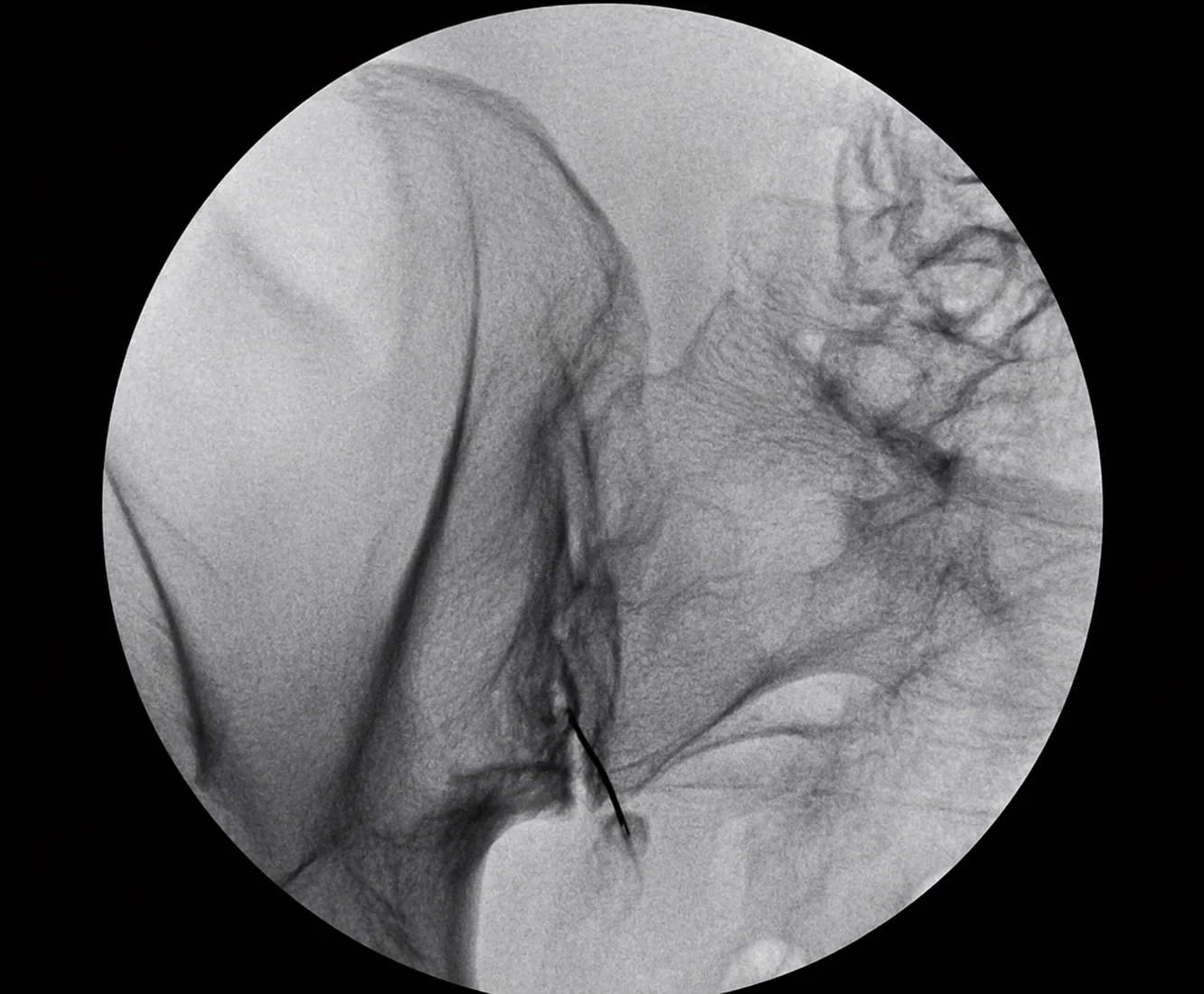
When sacroiliac joint injections are considered
An SI joint injection may be considered when pain appears consistent with SI joint dysfunction or inflammation and when a more precise diagnosis would help guide treatment decisions. This often depends on several factors taken together, including:
pain location and mechanical pattern
physical examination findings
aggravation with transitional movements, standing, walking, or single-leg loading
limited response to appropriate conservative care
the need to distinguish SI-mediated pain from lumbar spine, hip, or myofascial causes
In selected cases, the injection serves both a diagnostic and therapeutic role. The response may help clarify whether the joint is an important pain generator, while also providing temporary symptom reduction in some patients.
Diagnosis is not based on imaging alone
SI joint pain is often more clinically subtle than patients expect. MRI, CT, or x-ray findings may be normal, nonspecific, or incidental. Conversely, imaging abnormalities do not always mean the SI joint is the primary pain source.
That is why the decision to perform an injection is usually based on the overall clinical picture rather than a scan in isolation. At Network Spine, this includes attention to movement pattern, adjacent-region mechanics, spine and hip overlap, and the broader structural context in which symptoms developed.
What the procedure involves
Before the injection
The visit begins with focused reassessment. Not every patient with low back or buttock pain is an appropriate candidate, and more than one treatment path may be reasonable. In some cases, corrective exercise, activity modification, osteopathic treatment, further diagnostic clarification, or no procedure is the better next step.
During the injection
SI joint injections are performed with imaging guidance for accuracy. After the skin is prepared and the target is localized, a small amount of medication is placed into the joint. Depending on the clinical situation, the injectate may be intended primarily for diagnostic information, symptom reduction, or both.
The procedure itself is typically brief. The main value is not that it is quick, but that it can provide more specific information than a generalized trial-and-error approach.
After the injection
Patients are usually asked to monitor their response carefully over the hours and days that follow. The pattern of relief matters. A meaningful response may support the SI joint as a clinically relevant pain source. A limited response may suggest that pain is coming from another structure, that multiple pain generators are present, or that the clinical picture is more complex than initially apparent.

Why this is used selectively
At Network Spine, sacroiliac joint injections are used as part of a broader diagnostic strategy, not as a default treatment for low back pain. This is particularly important because SI-region pain is frequently multifactorial. The joint may be involved, but so may the lumbar spine, hip, surrounding ligaments, gluteal structures, or myofascial dysfunction.
Using injections selectively helps avoid oversimplifying the problem. It also helps determine whether the SI joint deserves further attention or whether treatment should be redirected elsewhere.
Important considerations
Relief is variable and depends on diagnosis, chronicity, biomechanics, and whether the SI joint is truly a primary pain source. Some patients improve substantially, some partially, and some not at all. An injection does not correct every contributor to pain, and it should not be viewed as a stand-alone solution in every case.
Sacroiliac joint injections are considered only when clinically appropriate after individualized evaluation. Treatment recommendations depend on the full picture, not on protocol alone.
Request an Appointment
If sacroiliac joint pain is being considered as part of a broader spine or pelvic pain evaluation, an appointment may help clarify whether the SI joint is a meaningful contributor and whether injection is appropriate.