

Epidural Steroid Injections
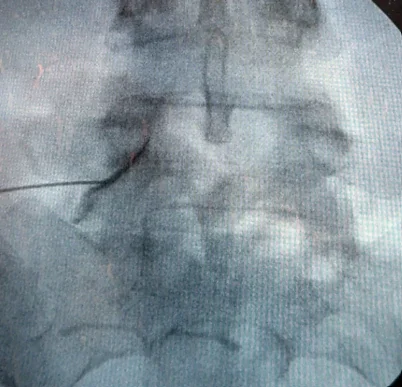
Epidural steroid injections are used selectively in this practice for patients whose symptoms, examination, and imaging suggest irritation or inflammation around a spinal nerve. The objective is not simply to perform an injection, but to determine whether a targeted anti-inflammatory procedure is likely to address the actual pain pattern and meaningfully improve function. These procedures are performed under fluoroscopic (X-ray) guidance with a C-arm, typically with contrast confirmation, to help support accurate placement at the intended level. Cervical and lumbar epidural injections are most common, with selected thoracic levels addressed when the clinical pattern supports it.
For appropriate patients, an epidural steroid injection may help reduce radiating arm, chest wall, rib, flank, or leg pain related to disc herniation, foraminal narrowing, spinal stenosis, or other causes of nerve-root irritation. It is generally more useful for radicular pain than for isolated muscular pain or purely axial neck or back pain.
When an Epidural Injection May Be Considered
This treatment may be considered when the pain pattern and examination findings suggest nerve-root irritation, such as neck pain or back pain that radiates into the shoulder, arm, chest wall, ribs, flank, buttock, leg, or foot in a radicular distribution.
Symptoms may overlap with pain felt in the shoulder, hip, knee, or other nearby regions. Because referred pain can arise from several spinal and musculoskeletal structures, including trigger points, the facet joints and sacroiliac joints, careful evaluation is important before selecting an injection.
Relevant imaging, when available, may show disc herniation, disc bulge, foraminal narrowing, spinal stenosis, or related findings that support the diagnosis.
Epidural injections are generally considered when symptoms remain limiting despite medication, activity modification, rehabilitation, or other conservative care.
Why this treatment is used selectively
Not every flare of neck pain, back pain, or disc-related symptoms requires an epidural injection. In this practice, the procedure is reserved for situations in which the history, examination, and imaging are reasonably aligned and a targeted intervention is likely to be useful. When another strategy is more appropriate, that is discussed directly.
A prior injection performed elsewhere does not automatically mean the same procedure should be repeated. In selected cases, a fresh review of the pain pattern, examination, imaging, and procedural target may support a different level, side, approach, or even a different pain generator altogether. That diagnostic precision can matter when determining whether an epidural injection is appropriate and how it should be performed.
Treatment Beyond the Epidural Injection
An epidural injection is directed at inflammation or irritation around a spinal nerve. It does not necessarily address every contributor to pain, restricted movement, or loss of function.
As nerve-related symptoms change, other findings may become more clinically relevant. Muscular guarding, myofascial trigger points, restricted spinal or rib motion, and compensatory movement patterns may persist even when radiating pain has improved.
For selected patients, osteopathic manipulative treatment may be used to address relevant mechanical restrictions or regional dysfunction. Trigger point injections may be considered when persistent myofascial pain or identifiable trigger points are contributing to symptoms. Physical therapy or a structured rehabilitation program may also be used to progressively restore movement, strength, and activity tolerance.
These treatments are not added automatically or used according to a fixed sequence. Follow-up allows the response to the epidural injection to be reassessed and the treatment plan adjusted based on the remaining pain pattern, examination findings, and functional goals.
The objective is to address the relevant components of the clinical problem rather than expecting a single injection to address every contributor to recovery.

When an epidural does not help
Response to epidural steroid injection varies and may range from little or no relief to substantial improvement. When benefit is limited, the reason may relate to diagnosis, target selection, anatomy, chronicity, or the fact that the primary pain generator is not primarily epidural-responsive.
Approaches used
Transforaminal epidural injection
A more targeted approach used when medication needs to be delivered to a specific nerve root at a specific level and side. This approach is often selected to place medication closer to the involved area. In some cases, the response to a targeted injection can add useful diagnostic clarity, although the procedure is primarily therapeutic rather than a stand-alone diagnostic test.
Interlaminar epidural injection
An approach that places medication into the epidural space at the affected region, allowing it to spread more broadly around the involved level or levels. Depending on the anatomy and symptom pattern, this may be preferable when a less focal distribution is appropriate.
Caudal epidural injection
A lower-entry approach used in selected lumbar or sacral cases, including some broader lower-spine symptom patterns or situations in which prior surgery or anatomy makes another route less favorable.
What a visit typically involves
The visit begins with review of symptoms, examination findings, prior treatment, medications, allergies, and any relevant imaging to confirm that an epidural injection is appropriate and to select the most suitable level and route. If the procedure proceeds, it is performed using sterile technique under fluoroscopic (X-ray) guidance with a C-arm. Local anesthetic is used at the skin, and contrast is typically used to confirm appropriate placement before medication is delivered. Patients are then observed briefly and discharged with post-procedure instructions.
Decision-making, expectations, and safety
The decision to proceed with an epidural steroid injection is individualized and made in the context of the pain pattern, examination findings, imaging, prior treatment, medical history, and overall goals of care. The purpose of the injection is generally to reduce inflammation around an irritated nerve and, when successful, to improve pain and function. Response varies. Some patients notice little change, while others experience meaningful improvement, and duration of relief also varies. The anticipated benefits, limitations, alternatives, and risks are reviewed as part of a shared decision-making process.
As with any procedure, potential risks include bleeding, infection, headache, medication reaction, temporary worsening of pain, and rare but serious neurologic complications. Whether the procedure is appropriate depends on the individual risk profile, anatomy, medications, and overall clinical situation.
Appointment Requests
Precise diagnosis. Thoughtful care. Individualized treatment.