

Facet Joint & Medial Branch Blocks
Selective, image-guided evaluation and treatment for neck and back pain.
Facet-related pain cannot be determined by imaging alone. At Network Spine, facet joint injections and medial branch blocks are used as targeted, image-guided diagnostic procedures to help determine whether facet-mediated pain is contributing to the clinical picture.
Rather than following a fixed procedural sequence, these findings are interpreted within a broader osteopathic and biomechanical framework. When appropriate, the next step may involve radiofrequency ablation, repeat diagnostic clarification, focused physical therapy or corrective exercise, osteopathic treatment, or selected image-guided intervention based on anatomy, activity level, and treatment goals.
What facet joint and medial branch blocks are
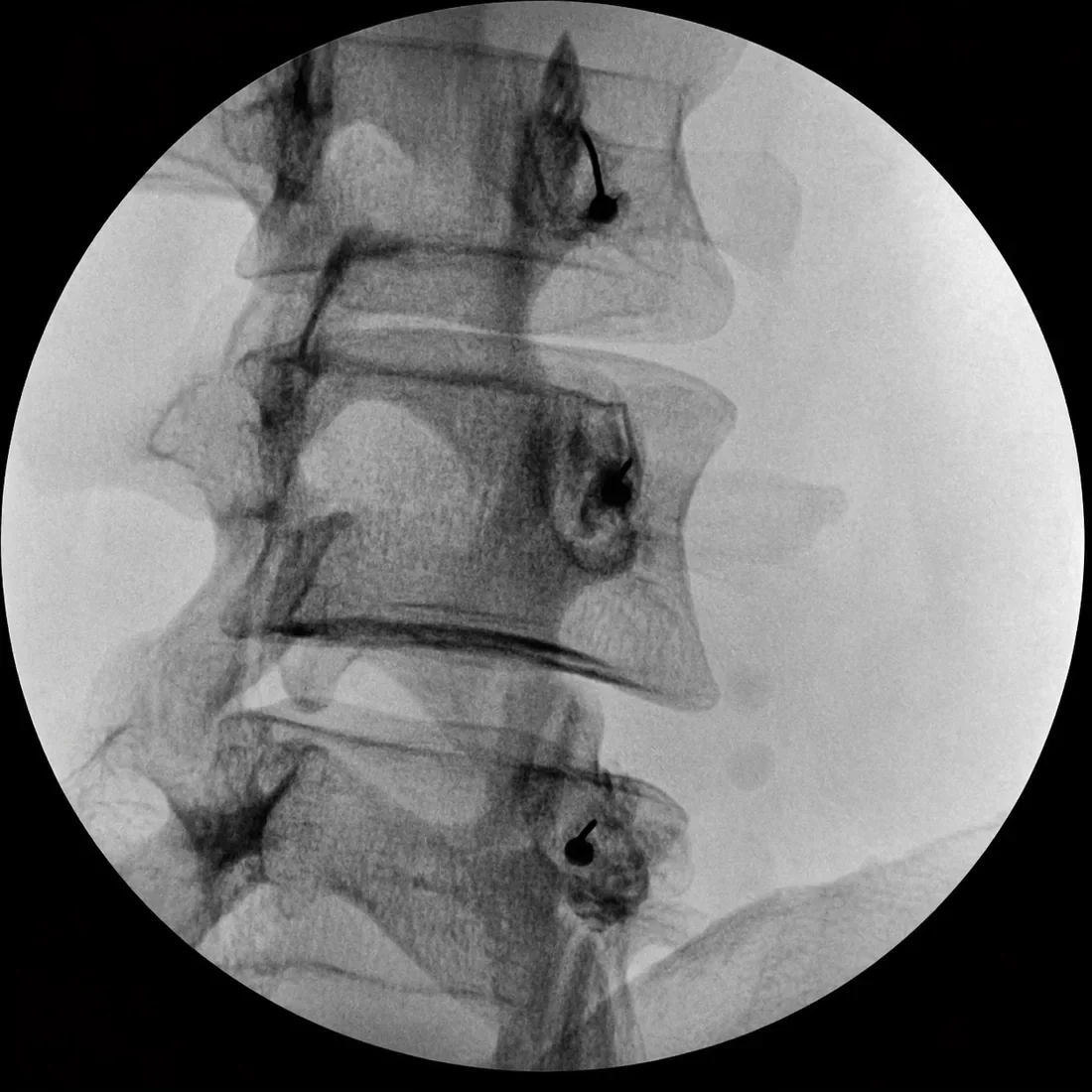
Facet joints are small joints in the spine that can contribute to certain types of neck or back pain. Medial branch nerves carry sensation from those joints. Facet joint injections and medial branch blocks are targeted image-guided procedures used primarily to evaluate whether the facet joints are meaningfully contributing to pain and, in selected cases, to provide temporary relief. These procedures are typically performed under fluoroscopic guidance, which remains the most established imaging approach for facet blocks and radiofrequency ablation. In selected situations, other image-guidance approaches may be considered, but their role is more limited and depends on anatomy, target, and clinical context.
When this may be considered
This type of evaluation may be appropriate in selected patients with:
Predominantly back pain or neck pain rather than primarily radiating arm or leg pain
Pain worsened by extension, rotation, loading, prolonged sitting, prolonged standing, or transition movements
Pain patterns not fully explained by disc or nerve root findings
Persistent or recurrent symptoms despite appropriate conservative care
A clinical picture suggesting the facet joints may be contributing to pain
Not every patient with neck or back pain is a candidate for this pathway, and not every abnormality seen on imaging is clinically meaningful.

How this approach differs
In many pain practices, positive diagnostic medial branch blocks are followed by radiofrequency ablation as the expected next step. In selected patients, that can be appropriate and is supported by the medical literature.
At Network Spine, that decision is not treated as automatic.
An osteopathic and biomechanical perspective looks more broadly at how the painful segment is functioning within the rest of the body. That may include segmental motion, postural loading, pelvic or rib mechanics, adjacent-region compensation, training demands, sport-specific movement, and whether the pain picture appears primarily degenerative, inflammatory, overload-related, or mixed.
The goal is not to avoid standard interventional care. The goal is to apply it more selectively and in a way that better matches the patient’s anatomy, demands, and timeline.
Why the osteopathic lens can matter
An osteopathic approach places procedures within a broader structural and functional assessment rather than treating them as isolated steps.
That may be especially relevant when imaging does not fully explain the pain pattern, when the painful segment may be overloaded by dysfunction elsewhere, or when the patient is highly active and preservation of movement quality, muscular function, and training continuity remains a priority.
What happens after diagnostic blocks
If diagnostic blocks support the facet joint as a meaningful pain generator, radiofrequency ablation may be considered in selected cases. At Network Spine, that decision is individualized rather than automatic, with attention to age, activity level, biomechanics, treatment goals, and timeline.
If a diagnostic block does not provide meaningful relief, facet-mediated pain becomes less likely.
Radiofrequency ablation may be considered in selected cases after diagnostic medial branch blocks support the target. It is a standard option and can be appropriate when the clinical picture, goals, and prior response fit that pathway.
At Network Spine, radiofrequency ablation is discussed as one option rather than the automatic endpoint of the process.
In selected cases, alternative tissue-focused orthobiologic options may also be discussed, particularly when the goal is to consider a more biologic approach rather than denervation alone.
Corticosteroid injection in selected settings
In some cases, corticosteroid injection may also be considered, particularly when the goal is symptom control over a shorter time horizon or when a faster return-to-play or return-to-function timeline is relevant.
These options are not appropriate for every patient, are not first-line in most cases, and may not be covered by insurance. Evidence, indication, and expected role vary by diagnosis, anatomy, age, demand level, and treatment goal.
Who this is for
This pathway is often a good fit for patients who:
Have persistent or recurrent neck or back pain
Want a more individualized evaluation rather than a protocol-driven injection sequence
Are trying to determine whether radiofrequency ablation is the right next step
Want treatment planning that takes biomechanics, activity demands, and overall strategy into account
Important considerations
Any procedure carries risks and limitations. Relief may be partial, substantial, temporary, or absent. Diagnostic blocks can provide useful information, but they are only one part of clinical decision-making.
Treatment recommendations are individualized. Depending on the situation, the most appropriate next step may be corrective exercise, osteopathic treatment, further diagnostic clarification, image-guided intervention, radiofrequency ablation, or no procedure.
Request Appointment
Request an appointment to discuss whether facet-mediated pain is part of the clinical picture and whether diagnostic blocks or other treatment options are appropriate.